Bio For Piri Successfully Concludes Two Years of Networking: The Project Making Forests an Engine for the Future in the Pyrenees
The Bio For Piri project has demonstrated the potential of the forest bioeconomy to conserve nature and revitalize rural areas, creating more resilient forests against wildfires and generating a future for the Pyrenees.
Over two years, the project has involved 76 individuals and 26 administrations, organizations, and companies, and has directly benefited 428 people through its activities. A total of 233 hectares of forest and 39 hectares of pastureland have been managed, and 72,356 hectares have been planned for fire prevention.
The Bio For Piri project, promoted by the Fundació Catalunya La Pedrera in coordination with the Bearded Vulture Conservation Foundation and four other organizations, concludes two years of work with results that confirm its social, economic, and environmental impact, as well as its potential as a replicable model.
Given the fragility of the Pyrenees, caused by the abandonment of agricultural and livestock farming, which has increased biomass in the forests and transformed them into continuous areas highly vulnerable to fire, Bio For Piri has adopted an innovative strategy: turning the risk of a major forest fire into a driver of change. Forest bioeconomy is key to revitalizing the region, generating employment, and making forests more resilient.
Bio For Piri has worked in two areas—Alinyà (Alt Urgell, Lleida) and Aínsa-Sobrarbe (Huesca)—with a clear vision: to care for the forest, reduce risk, and promote new activities that keep the region alive. It is a virtuous cycle: naturalistic and adaptive forest management, fire prevention, and socioeconomic revitalization.
Project Impact in Figures
The results of Bio For Piri can be explained by its impact in three distinct areas: social, economic, and environmental.
Social Impact:
- Participation of 76 individuals and 26 administrations, entities, and companies involved in the project.
- Estimated communication impact of 20 million people.
- 428 people directly benefited from the actions carried out.
- Organization of 2 bioblitzes (citizen science events) with 58 participants.
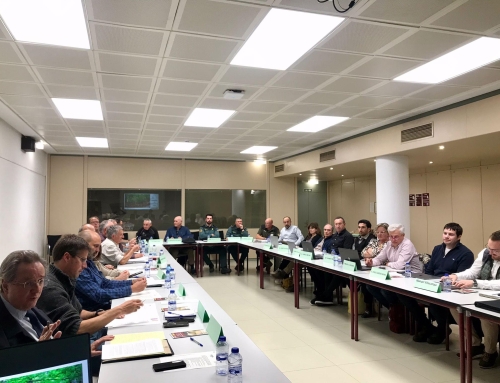
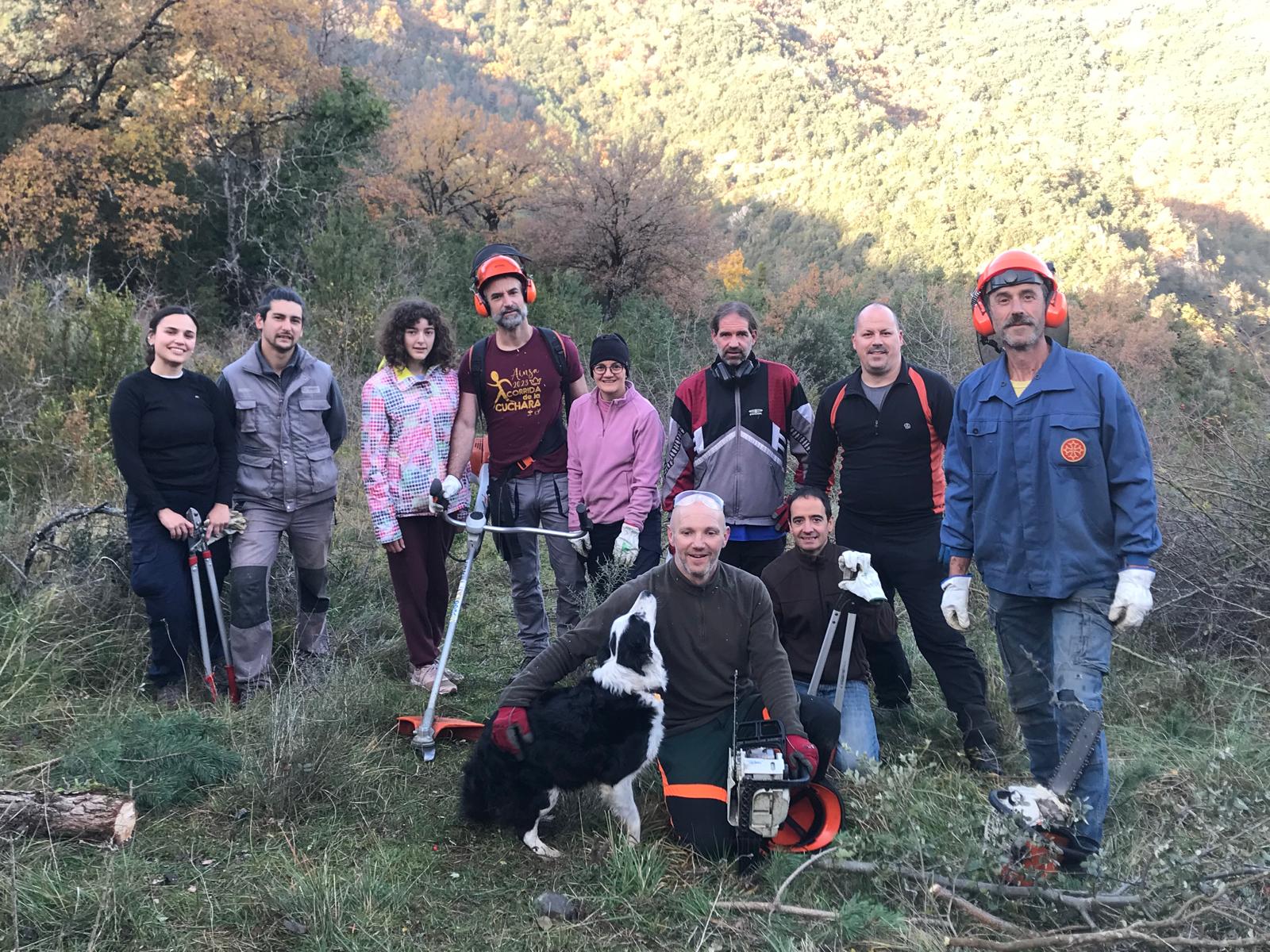
- Holding of 17 volunteer days that brought together a total of 105 participants.
Economic Impact:
- Acquisition of 7 new biomass supply clients, including the Primary Care Center (CAP), the municipal sports center, and the municipal music schools of La Seu d’Urgell, as well as a local pig farm.
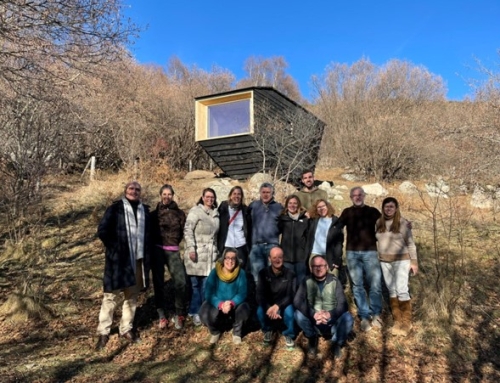
Construction of 1 rural house built with local wood in collaboration with the IAAC (Andalusian Institute of Contemporary Art). - Two editions of the forestry worker training course were held, with a total of 16 participants, 13 of whom obtained the European chainsaw operator’s license (ECC1).
Six jobs were created in the forest. Four knowledge transfer seminars on naturalistic forest management were organized, with approximately 87 participants. - Eight environmental packages were developed to attract private capital to boost the forest bioeconomy and help companies meet their sustainability goals.
Environmental Scope:
- Planning of 356 hectares of forest for fire prevention.
- Management of 233.4 hectares of forest using naturalistic silviculture methods.
- Management of 39 hectares of pastureland to promote extensive livestock farming.
- Creation of 11 water points for livestock.
- Construction of one water tank for firefighting equipment.
- Improvement of 25.9 kilometers of roads.
- Installation of 5 interactive trails.
- in the Aínsa-Sobrarbe area, allowing visitors to learn more about the local forests. Implementation of 12 biodiversity improvement projects within strategic fire prevention areas.
Final Conclusions
After two years of work, the Bio For Piri approach has been validated and has demonstrated great potential. It is a project that works and can be replicated in other areas.
The project has generated important lessons, such as the fact that investing in a network of small farms is the most sustainable way to foster a sense of belonging and revitalize the region. It has also shown that local timber has the potential to significantly increase its added value in areas such as bioconstruction and become a key asset in the region’s development.
However, boosting the local economy is not enough to encourage rural repopulation. It has been shown that this is a challenge that extends beyond the scope of this project. Empowering women and guaranteeing access to housing and land, for example, are key factors in addressing the demographic challenge.
Project Partners
This initiative is led by the Fundació Catalunya la Pedrera in coordination with the Centre de Ciència i Tecnologia Forestal de Catalunya (Centre for Forest Science and Technology of Catalonia), the Bearded Vulture Conservation Foundation, the Business and Climate Foundation, the Integra Pirineus Foundation, and the Pau Costa Foundation.
Bio For Piri is supported by the Biodiversity Foundation of the Ministry for Ecological Transition and the Demographic Challenge (MITECO) within the framework of the Recovery, Transformation and Resilience Plan (PRTR), funded by the European Union – NextGenerationEU.

fundación-biodiversidad #ProyectosPRTR #PlanDeRecuperación #NextGenerationEU
@fundacio-catalunya-la-pedrera / @fundacion-privada-empresa-clima / @centre-ciencia-tecnologia-forestal-catalunya / @pau-costa-foundation / @integra-pirineus / @fundación-quebrantahuesos